
What Is a Budget Airline and How It Impacts Travelers
Over half of American travelers prefer budget airlines for affordable trips, yet many are surprised by the trade-offs these carriers require. With ticket prices sometimes less than half of traditional airlines, low-cost carriers have changed how people fly in the United States and around the world. By understanding what sets budget airlines apart and why their services differ, you can make smarter choices and stretch your travel dollars even further.
Table of Contents
- Defining Budget Airlines And Core Concepts
- Types Of Budget Airlines Around The World
- How Budget Airlines Operate And Save Costs
- Key Features And Service Limitations Explained
- Comparing Budget Airlines To Full-Service Airlines
- Costs, Hidden Fees, And Traveler Misconceptions
Key Takeaways
| Point | Details |
|---|---|
| Budget Airlines Focus on Affordability | These carriers offer lower ticket prices by stripping away traditional amenities and implementing cost-saving operational strategies. |
| Innovative Business Models | Budget airlines utilize simplified fleet configurations, point-to-point routes, and separate charges for additional services to maximize efficiency. |
| Global Growth and Accessibility | The rise of budget airlines has made air travel accessible to wider demographics, particularly in regions like Asia-Pacific and Europe. |
| Consideration of Hidden Fees | Travelers should be mindful of potential hidden fees, such as baggage and seat selection, to accurately gauge total travel costs. |
Defining Budget Airlines and Core Concepts
Budget airlines represent a revolutionary approach to air travel that prioritizes affordability and efficiency over traditional full-service carrier experiences. These airlines have transformed the transportation landscape by offering significantly lower ticket prices through strategic operational modifications. Budget carriers typically achieve their cost reductions by implementing unique business models that strip away conventional airline amenities.
The core characteristics of budget airlines revolve around several key strategies designed to minimize expenses and maximize passenger throughput. These strategies often include:
- Simplified Fleet Configuration: Operating a single aircraft type to reduce maintenance and training costs
- No-Frills Service Model: Charging separately for extras like baggage, seat selection, and in-flight meals
- High-Density Seating: Maximizing passenger capacity by configuring aircraft with more seats
- Point-to-Point Routes: Focusing on direct, efficient routes rather than complex hub-and-spoke systems
In the Asia-Pacific region, budget airlines have experienced remarkable growth, with carriers like Lion Air becoming significant players in the aviation ecosystem. These airlines have successfully democratized air travel by making transportation accessible to broader demographic segments who previously considered flying cost-prohibitive.
Understanding budget airlines requires recognizing their fundamental trade-off: reduced comfort and additional fees in exchange for substantially lower base ticket prices. Travelers who prioritize cost over traditional airline amenities find these carriers exceptionally attractive. By maintaining lean operational structures and implementing innovative cost-cutting techniques, budget airlines continue to reshape global transportation dynamics, offering millions of passengers affordable travel opportunities that were unimaginable just decades ago.
Types of Budget Airlines Around the World
Budget airlines have proliferated globally, creating diverse categories that cater to different regional travel needs and economic landscapes. Worldwide budget carriers can be strategically classified into several distinct geographical and operational segments, each with unique characteristics and market positioning.
In North America, budget airlines typically fall into three primary categories:
- Ultra-Low-Cost Carriers: Focusing exclusively on minimal pricing, such as Spirit Airlines and Frontier Airlines
- Regional Discount Airlines: Serving specific geographic corridors, like Southwest Airlines
- Hybrid Budget Models: Offering slightly more amenities while maintaining competitive pricing, such as JetBlue
European budget airlines demonstrate remarkable diversity, ranging from pan-continental operators to country-specific discount carriers. Prominent examples include Ryanair, which revolutionized short-haul travel with incredibly low fares, and EasyJet, known for connecting major European cities at unprecedented price points. These carriers have fundamentally transformed travel accessibility across the European continent.
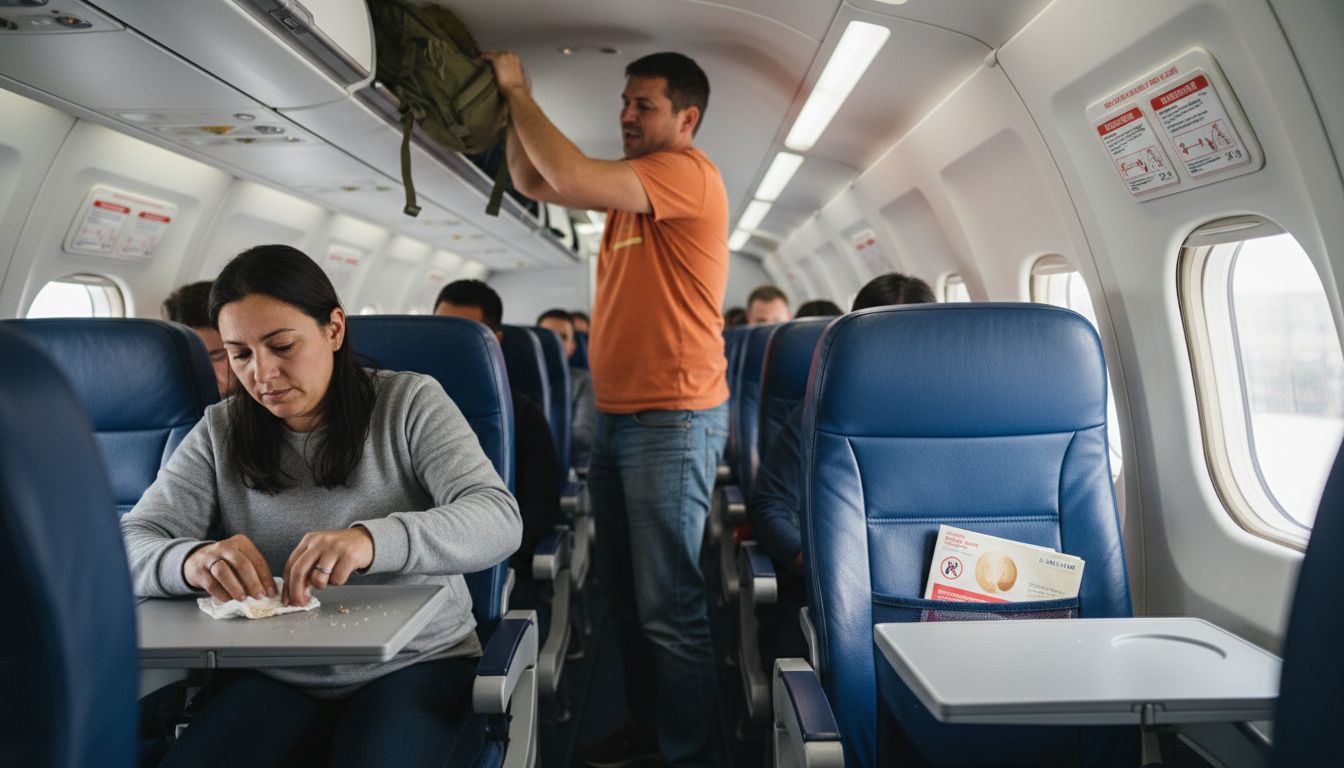
In the Asia-Pacific region, budget airlines have experienced explosive growth, with carriers like AirAsia, Scoot, and Jetstar creating extensive networks across diverse geographical terrains. These airlines have not only made air travel affordable for millions but have also stimulated economic development by connecting previously isolated regional markets. By offering extremely competitive pricing and expanding route networks, Asian budget carriers have effectively democratized air transportation in one of the world’s most populous and economically dynamic regions.
How Budget Airlines Operate and Save Costs
Budget airlines have developed intricate operational strategies that enable them to dramatically reduce expenses and offer significantly lower ticket prices. Capacity expansion and strategic cost management represent core mechanisms through which these carriers maintain their competitive edge in the global transportation market.
Key cost-saving techniques employed by budget airlines include:
- Simplified Fleet Configuration: Utilizing a single aircraft type to minimize maintenance and training expenses
- Secondary Airport Selection: Operating from less expensive regional airports with lower landing fees
- Quick Turnaround Times: Minimizing aircraft ground time to maximize operational efficiency
Operational efficiencies are further enhanced through sophisticated approaches like standardized maintenance protocols and lean staffing models. These carriers typically reduce overhead by implementing streamlined check-in processes, eliminating complimentary services, and charging separately for additional amenities such as baggage, seat selection, and in-flight meals.
Additionally, budget airlines leverage advanced technological solutions to optimize their business models. Digital platforms enable direct ticket sales, reducing distribution costs associated with traditional travel agencies. By implementing dynamic pricing algorithms, these carriers can adjust ticket prices in real-time based on demand, maximizing revenue potential while maintaining their core promise of affordable travel. Cheap Flights & Airline Tickets represent a testament to how innovative operational strategies can transform the aviation landscape, making air travel accessible to a broader range of travelers worldwide.
Key Features and Service Limitations Explained
Budget airlines have revolutionized travel by offering a distinctive service model that prioritizes affordability over traditional comfort. Ultra low-cost carrier models fundamentally reimagine air travel by stripping away conventional amenities and charging separately for additional services, creating a transparent pricing structure that empowers travelers to customize their experience.
Typical service features and limitations of budget airlines include:
- Bare Minimum Seating: Tightly configured seats with minimal legroom and recline options
- Pay-Per-Service Model: Charging separately for:
- Advance seat selection
- Baggage
- In-flight meals
- Priority boarding
- No Complimentary Extras: Eliminating free drinks, snacks, and entertainment
Service class variations demonstrate the nuanced approach budget airlines take to meeting diverse traveler needs. Some carriers offer tiered pricing structures that allow passengers to incrementally add comfort features, transforming the traditional one-size-fits-all airline experience into a modular, customizable journey. This approach enables budget-conscious travelers to control their spending by paying only for the services they truly require.
The trade-offs are clear: reduced comfort and convenience in exchange for significantly lower ticket prices. Savvy travelers who understand these limitations can strategically navigate budget airline services, packing light, bringing their own entertainment, and selecting seats carefully to maximize value. By finding cheap flights, passengers can unlock travel opportunities previously out of reach, making global exploration more accessible than ever before.
Comparing Budget Airlines to Full-Service Airlines
Competitive market dynamics have dramatically transformed the traditional airline industry, creating a nuanced landscape where budget and full-service carriers increasingly compete for passenger attention. The fundamental differences between these airline types extend far beyond pricing, encompassing entire operational philosophies and passenger experience strategies.
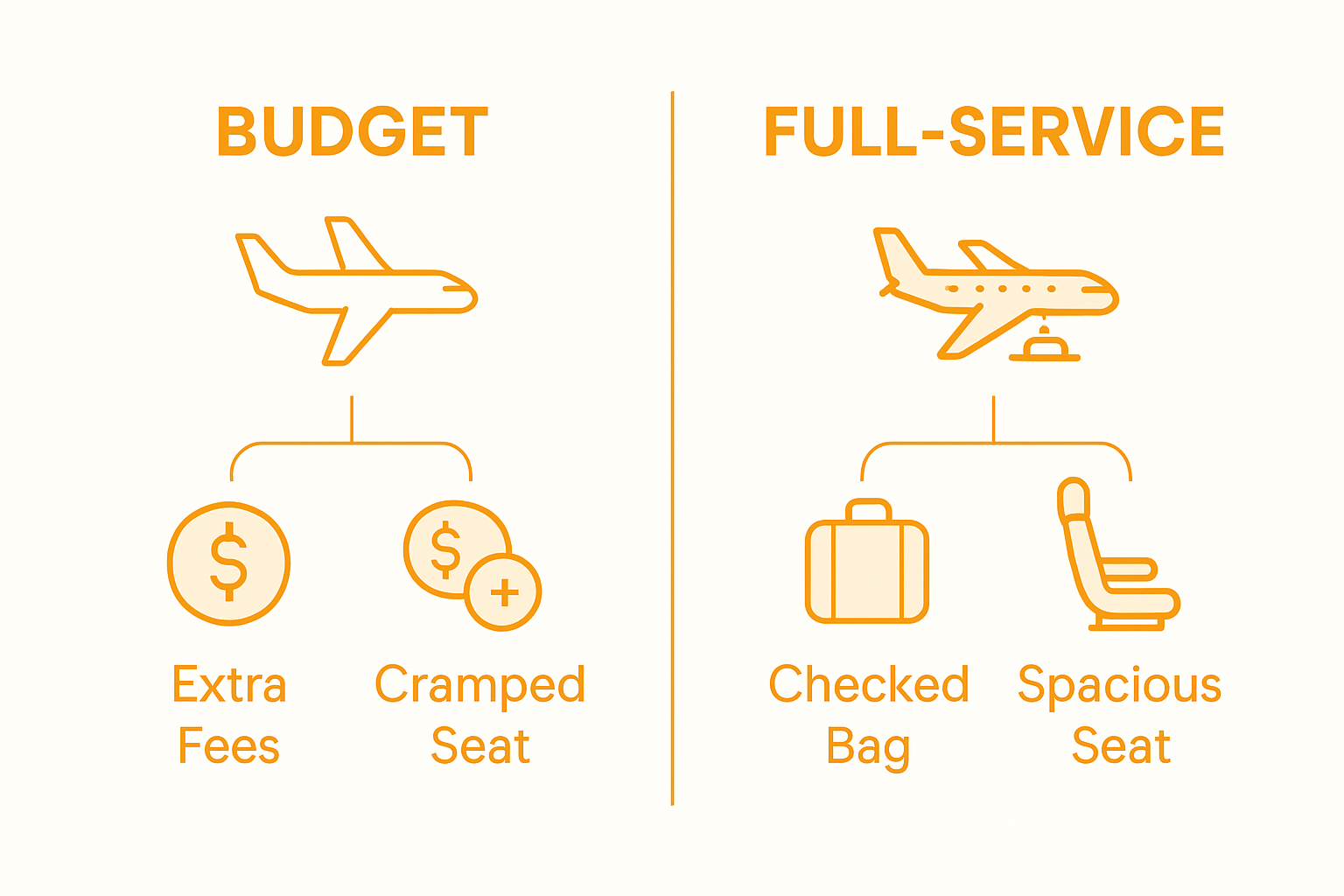
Key comparative aspects include:
- Pricing Structure:
- Budget Airlines: Bare-bones base fare with à la carte additional services
- Full-Service Airlines: Comprehensive pricing with more included amenities
- Baggage Policies:
- Budget Airlines: Strict weight limits, significant fees for checked luggage
- Full-Service Airlines: More generous baggage allowances included in ticket price
- Seating Comfort:
- Budget Airlines: Minimal legroom, tightly configured seats
- Full-Service Airlines: More spacious seating, additional recline options
Evolving airline associations demonstrate the blurring lines between traditional airline categories. Some budget carriers now offer hybrid models that incorporate select full-service features, challenging long-standing industry distinctions. This convergence reflects a broader trend of airlines adapting to increasingly sophisticated consumer demands and competitive market pressures.
Ultimately, the choice between budget and full-service airlines depends on individual travel priorities. Cost-conscious travelers might find cheap flights compelling, while those valuing comfort and convenience may prefer traditional carriers. The modern travel landscape offers unprecedented flexibility, allowing passengers to select precisely the level of service that matches their specific needs, budget, and travel expectations.
Costs, Hidden Fees, and Traveler Misconceptions
Budget airlines operate on a deceptively complex pricing model that can catch unsuspecting travelers off guard. Detailed fee structures reveal a sophisticated approach to pricing that requires careful navigation and strategic planning from passengers seeking true value.
Common hidden fees and potential additional charges include:
- Baggage Fees:
- Carry-on luggage charges
- Checked bag fees increasing closer to departure
- Weight and size penalties
- Seat Selection:
- Charges for choosing specific seats
- Premium seating upgrades
- Check-In Procedures:
- Online vs. airport check-in fees
- Priority boarding surcharges
Many travelers mistakenly assume budget airlines offer identical services to traditional carriers, leading to unexpected expenses. The no-frills model means passengers pay only for precisely what they consume, transforming travel into an à la carte experience. This approach can result in significant savings for prepared travelers who understand the pricing nuances.
Strategic travelers can mitigate these potential costs by carefully planning their flight booking in advance. Understanding the true total cost requires calculating base fare plus anticipated additional fees, which often includes baggage, seat selection, and potential change or cancellation penalties. While budget airlines can offer remarkable savings, savvy travelers must approach booking with a detailed, comprehensive perspective to avoid financial surprises.
Discover Affordable Travel With Confidence and Clarity
Budget airlines can feel confusing with their no-frills pricing and extra fees for every add-on. The challenge is finding cheap flights without unexpected costs and discomfort. At Xpartis, we understand the importance of transparency and control when booking your travel. Our platform helps you navigate the complex world of budget airlines by comparing options clearly so you can choose the best mix of price and convenience.
Unlock your next adventure by booking through Xpartis. Experience the ease of finding cheap flights and transparent pricing that lets you avoid hidden fees. Start your journey now and enjoy flight options that suit your budget and needs perfectly.
Frequently Asked Questions
What are budget airlines?
Budget airlines are airlines that focus on offering lower ticket prices by minimizing traditional airline services and amenities. They typically employ operational strategies that allow them to reduce costs while maximizing passenger capacity.
How do budget airlines save costs compared to full-service airlines?
Budget airlines save costs through strategies like simplified fleet configurations, lower secondary airport fees, quick turnaround times, and charging separately for additional services such as baggage and in-flight meals. This enables them to offer significantly lower base fares.
What are common fees associated with budget airlines?
Common fees for budget airlines include baggage fees for carry-on and checked luggage, charges for seat selection, and fees for priority boarding or online check-in. Travelers should be aware of these potential costs to avoid unexpected expenses.
Are budget airlines worth it for travelers?
Budget airlines can be worth it for cost-conscious travelers who prioritize savings over comfort. However, it’s essential to consider the total cost, including any additional fees, and whether the reduced amenities align with personal travel preferences.
Recommended
Related Posts








- Trending
- Comments
- Latest