
Short-Term Rentals Explained: Key Types and Laws
More than 100 million travelers each year now choose short-term rentals over hotels, reshaping the global travel experience. Flexible and often more affordable, these furnished homes or rooms bring local flavor and diverse options to visitors everywhere. As digital platforms have made booking easier than ever, both hosts and guests face new choices and responsibilities. Understanding what defines a short-term rental is the first step to making smart travel or hosting decisions.
Table of Contents
- Defining Short-Term Rentals Globally
- Popular Types and Booking Platforms
- How Short-Term Rental Stays Work
- Legal Requirements and Local Regulations
- Guest and Host Rights and Obligations
- Risks, Costs, and Key Pitfalls
Key Takeaways
| Point | Details |
|---|---|
| Growth of Short-Term Rentals | Short-term rentals have surged in popularity, providing diverse and personalized accommodation options through digital platforms like Airbnb and Vrbo. |
| Regulatory Complexity | Navigating various local regulations and compliance standards is crucial for both hosts and guests to avoid legal pitfalls. |
| Risks and Costs | Property owners and travelers must be aware of potential financial risks, including hidden costs and regulatory compliance expenses. |
| Guest and Host Responsibilities | A clear understanding of the rights and obligations between guests and hosts is essential for fostering positive rental experiences. |
Defining Short-Term Rentals Globally
Short-term rentals (STRs) have transformed how travelers experience accommodations worldwide. According to Congress, these are furnished homes or rooms typically rented for less than 30 days, often serving travelers seeking tourism or brief business trips. Unlike traditional hotel stays, short-term rentals provide more personalized, flexible lodging options that have surged in popularity with digital platforms.
The emergence of online booking platforms has dramatically reshaped the short-term rental landscape. Platforms like Airbnb, Vrbo, and Booking.com have made it easier than ever for property owners to list spaces and for travelers to find unique accommodations. As ONS UK notes, these rentals now encompass a wide range of properties – from city apartments to rural cottages – offering travelers unprecedented diversity in their lodging choices.
Key characteristics of short-term rentals include:
- Duration typically ranges from 1-29 nights
- Often fully furnished and equipped
- Available across diverse property types
- Booked primarily through online platforms
- Generally more cost-effective than traditional hotel rooms
- Provide a more authentic local living experience
While short-term rentals offer tremendous flexibility, they also represent a complex ecosystem with varying legal and regulatory frameworks across different regions. Understanding local guidelines, tax implications, and community regulations becomes crucial for both property owners and travelers navigating this dynamic market.
Popular Types and Booking Platforms
Short-term rental platforms have revolutionized how travelers find and book unique accommodations worldwide. According to Wikipedia, short-term rentals encompass furnished self-contained apartments or houses rented for brief periods, serving as compelling alternatives to traditional hotel stays. These platforms have transformed travel accommodations by offering unprecedented flexibility and diversity in lodging options.
The digital marketplace for short-term rentals features several prominent platforms, each with unique characteristics. Platforms like Airbnb, Vrbo, Booking.com, and 9flats have created a competitive ecosystem where property owners can easily list spaces and travelers can discover distinctive accommodations. These online marketplaces have democratized travel lodging, enabling individuals to monetize spare rooms or entire properties while providing travelers with more personalized and often more affordable alternatives.
Popular types of short-term rental properties include:
- Entire Home/Apartment: Complete private living spaces
- Private Room: Single room within a shared residence
- Shared Room: Budget-friendly option with shared living spaces
- Vacation Homes: Standalone properties in tourist destinations
- Loft Spaces: Urban accommodations with modern amenities
- Eco-Friendly Stays: Sustainable housing options
While these platforms offer immense convenience, travelers should always review property details, read reviews carefully, and understand booking policies. An internal guide on last-minute booking can provide additional insights into navigating these diverse rental options effectively.
How Short-Term Rental Stays Work
Short-term rental stays have evolved into a streamlined process that combines digital convenience with personalized accommodations. According to Wikipedia, these rentals typically offer comprehensive amenities like fully equipped kitchens and laundry facilities, providing travelers with home-like experiences beyond traditional hotel offerings. The booking process has been dramatically simplified through online platforms that connect travelers directly with property owners.
The typical rental workflow involves several key steps. Travelers browse available properties, comparing features, prices, and reviews before selecting their ideal accommodation. Booking procedures often include additional verification measures such as credit checks, damage deposits, and cleaning fees. Some platforms utilize sophisticated property management software like Guesty, which helps property managers streamline operations including guest check-ins, communication, and revenue tracking.
Critical steps in the short-term rental booking process include:
- Create user profile on rental platform
- Browse and filter available properties
- Review property details and amenities
- Check host ratings and previous guest reviews
- Select dates and complete booking
- Communicate with host about check-in details
- Pay reservation fee and any additional charges
- Receive digital access codes or key instructions
Successful short-term rental experiences depend on clear communication, understanding platform policies, and selecting accommodations that match your specific travel needs.
IMAGE:descriptive_key_1] [An internal guide on last-minute booking can provide additional strategies for securing the best possible rental experience.
Legal Requirements and Local Regulations
The landscape of short-term rental regulations has become increasingly complex as cities and municipalities grapple with the transformative impact of these accommodations. According to Springer Research, many cities have implemented strategic regulations to manage the proliferation of short-term rentals, including caps on the number of days a property can be rented annually. These measures aim to balance the interests of property owners, travelers, and local communities.
Research from Cornell Labs highlights the significant community impacts driving these regulatory efforts. The rapid growth of short-term rentals has prompted local governments to develop comprehensive frameworks addressing critical issues such as neighborhood disturbances, housing availability, and economic implications. Property owners and travelers must now navigate a complex web of local ordinances that can vary dramatically between jurisdictions.
Key regulatory considerations for short-term rentals typically include:
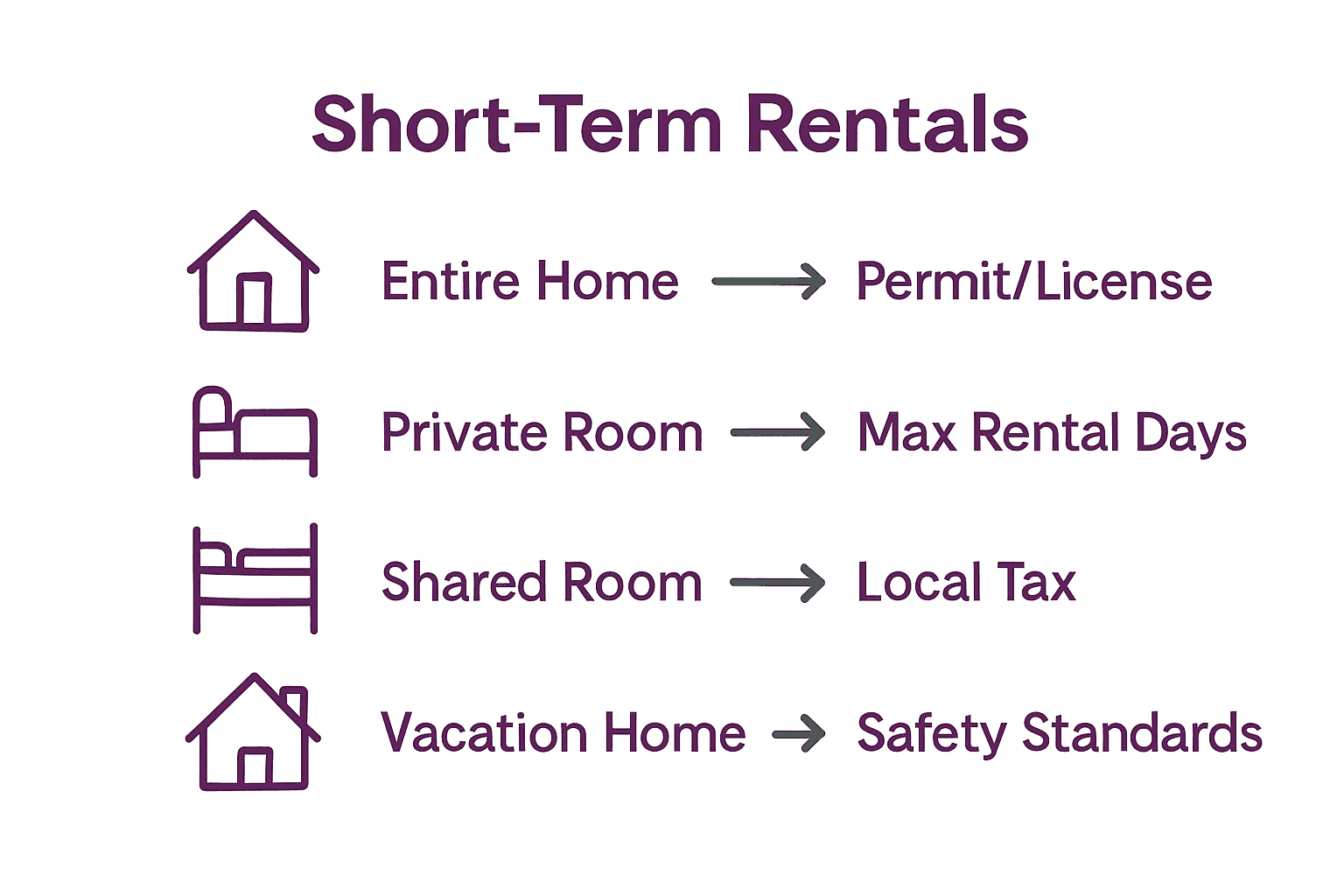
- Registration and licensing requirements
- Annual rental day limitations
- Occupancy and safety standards
- Tax collection and remittance obligations
- Minimum distance between rental properties
- Noise and neighborhood compatibility rules
- Insurance and liability requirements
- Specific zoning restrictions
Understanding these regulations is crucial for both property owners and travelers.
VIDEO:video_content] [An internal guide on last-minute booking can provide additional context for navigating these complex legal landscapes and ensuring compliance with local requirements.
Guest and Host Rights and Obligations
The relationship between short-term rental hosts and guests is governed by a complex set of rights and responsibilities that extend beyond typical transactional interactions. According to Springer Research, regulatory frameworks now explicitly define the obligations of both parties, including compliance with local laws, tax requirements, and adherence to critical safety standards. These guidelines aim to create a transparent and accountable ecosystem for short-term rentals.
Cornell Labs highlights how local governments are developing nuanced regulations to balance the interests of hosts, guests, and residents. This delicate balance addresses potential community impacts, including noise considerations, safety protocols, and the broader implications for local housing markets. The evolving legal landscape requires both hosts and guests to be increasingly aware of their mutual responsibilities.
Key rights and obligations for hosts include:
- Maintain property in safe, habitable condition
- Provide accurate and truthful property descriptions
- Respond promptly to guest communications
- Comply with local registration and tax requirements
- Respect guest privacy and personal space
- Implement necessary safety and hygiene standards
- Disclose any potential property limitations or risks
- Manage noise and neighborhood compatibility
Guests similarly bear significant responsibilities during their short-term rental stay. An internal guide on last-minute booking can offer additional insights into navigating these complex interpersonal and legal considerations, ensuring a positive experience for both hosts and travelers.
Risks, Costs, and Key Pitfalls
Short-term rentals present a complex landscape of potential financial opportunities and significant risks for property owners and travelers alike. Springer Research reveals that implementation of rental restrictions can dramatically influence various stakeholders, affecting rental availability, pricing dynamics, and neighborhood economic ecosystems. These nuanced changes require careful navigation and strategic planning.
Financial considerations extend beyond simple rental income, encompassing multiple hidden costs and potential liabilities. Property owners must budget for additional expenses such as increased maintenance, higher utility costs, specialized insurance, professional cleaning services, and potential regulatory compliance fees. Travelers, meanwhile, face risks including unexpected cancellations, misrepresented property conditions, and potential safety concerns that can transform an anticipated relaxing trip into a stressful experience.
Key risks and potential pitfalls include:
- Unexpected regulatory compliance expenses
- Potential property damage
- Inconsistent rental income
- Higher insurance premiums
- Neighborhood resistance to short-term rentals
- Tax complications and reporting requirements
- Platform commission and service fees
- Potential legal disputes with guests or local authorities
Navigating these challenges requires thorough research and proactive management. An internal guide on last-minute booking can provide additional strategies for mitigating risks and maximizing the potential of short-term rental investments.
Navigate Short-Term Rentals with Confidence Using Xpartis
Understanding the complex world of short-term rentals means dealing with local regulations, hidden costs, and the challenge of finding the perfect accommodation that fits your unique needs. This article highlights key concerns like legal requirements, booking risks, and the invaluable need for clear communication between hosts and guests. These challenges can feel overwhelming but knowing where to start makes all the difference.
Whether you want a fully furnished home for a short stay or a private room with local charm, the right tools can simplify your search. At Xpartis, we offer a comprehensive travel portal that helps you book flights, hotels, car rentals, and activities, so you can craft your entire trip in one place. Save time and reduce stress by exploring multiple lodging options backed by reliable reviews and transparent booking details.

Don’t let confusing regulations or last-minute concerns hold you back. Visit Xpartis today to explore flexible accommodation choices that match your travel goals. To master timely reservations and avoid pitfalls, check out our resource on last-minute bookings, a perfect complement to your short-term rental journey. Start planning smarter and book with confidence now.
Frequently Asked Questions
What are short-term rentals?
Short-term rentals are furnished homes or rooms typically rented for less than 30 days, offering travelers personalized and flexible lodging options as alternatives to traditional hotels.
How do I book a short-term rental?
To book a short-term rental, create a user profile on a rental platform, browse available properties, review their details and host ratings, select your desired dates, and complete the booking process by paying any required fees.
What types of properties are available for short-term rentals?
Short-term rentals include a variety of property types such as entire homes or apartments, private rooms, shared rooms, vacation homes, loft spaces, and eco-friendly stays, providing diverse options for travelers.
What legal requirements should I consider for short-term rentals?
Key legal requirements for short-term rentals often include registration and licensing, occupancy and safety standards, tax collection obligations, and adherence to specific local regulations that vary by jurisdiction.
Recommended




- Trending
- Comments
- Latest